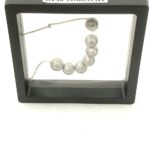
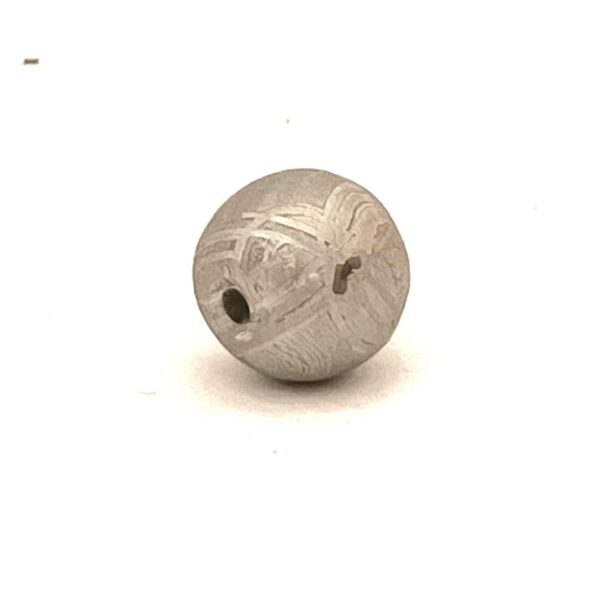
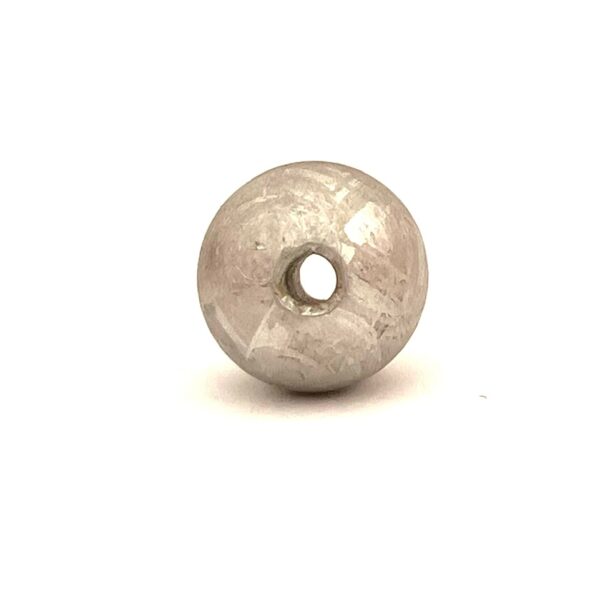
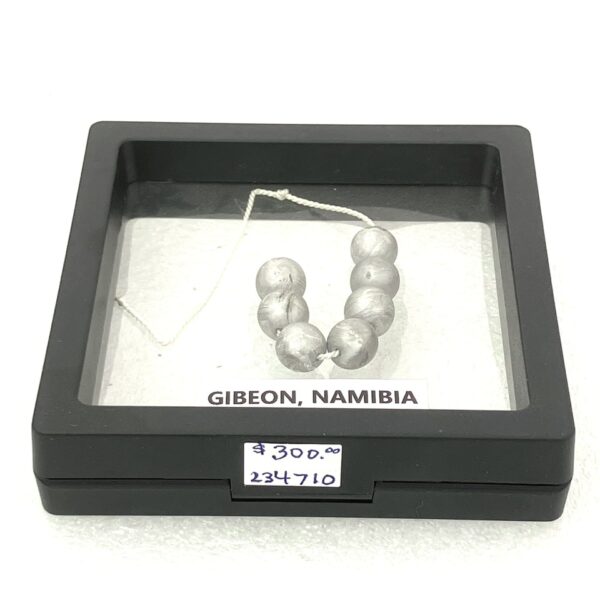
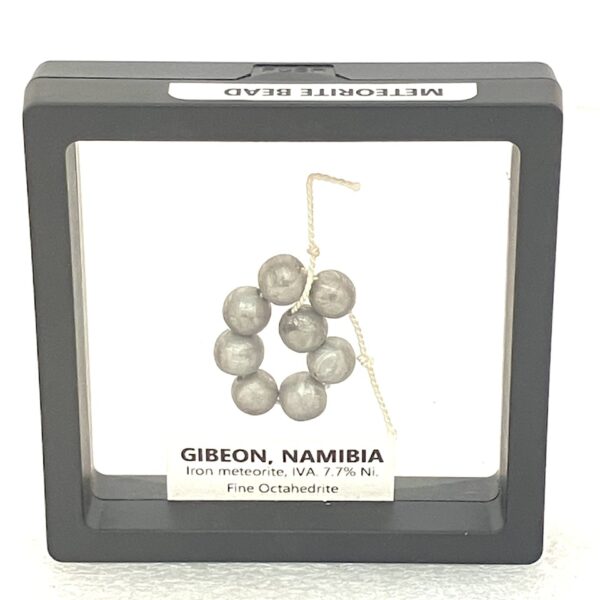
Strand of brilliantly etched beads are an average 9 mm, each are unique, imperfect, handmade and drilled beads. Weighing 21.4 grams total, each bead is approximately 3 grams. Likewise, the length, 63 mm for the set mean an average of 9mm each (almost 3/8 inch). No two are just alike but similar.
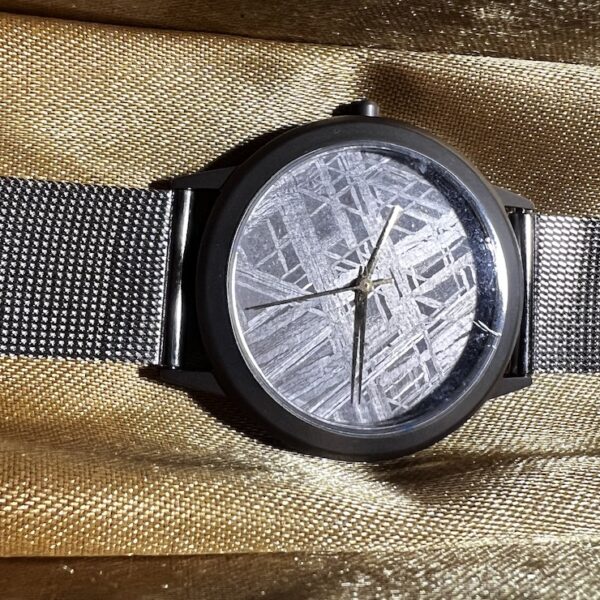
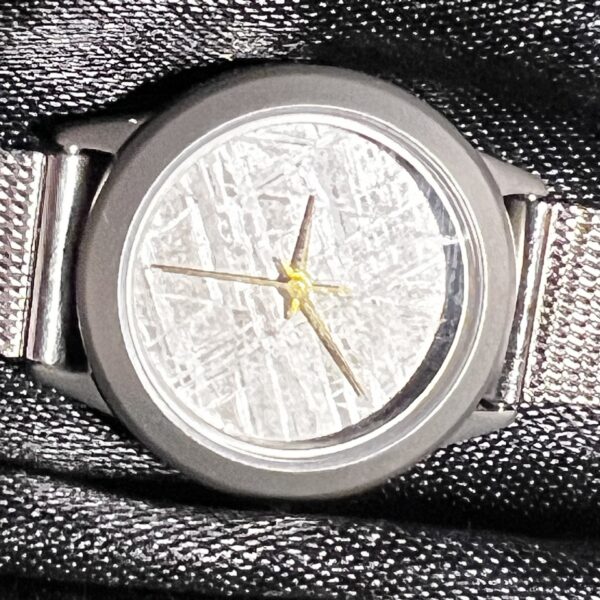
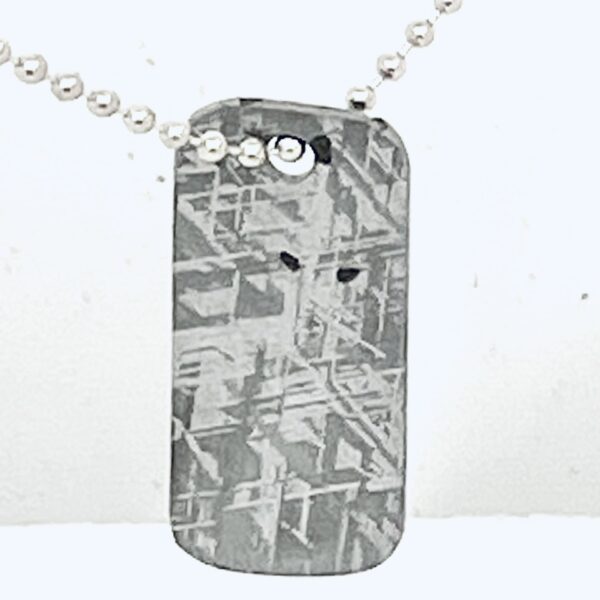
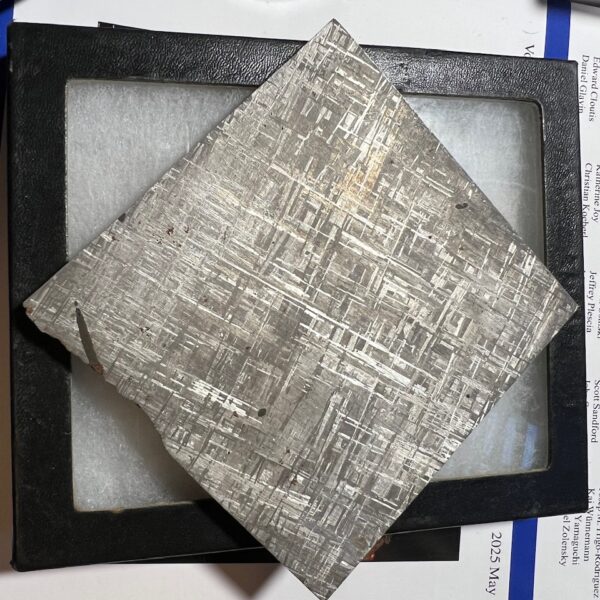
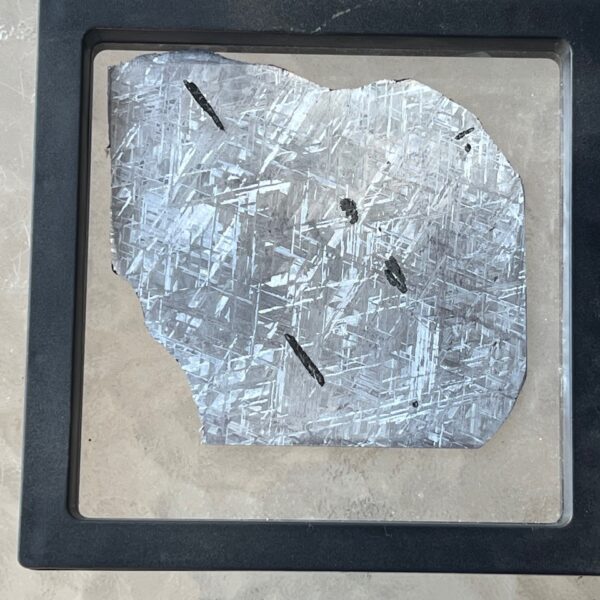
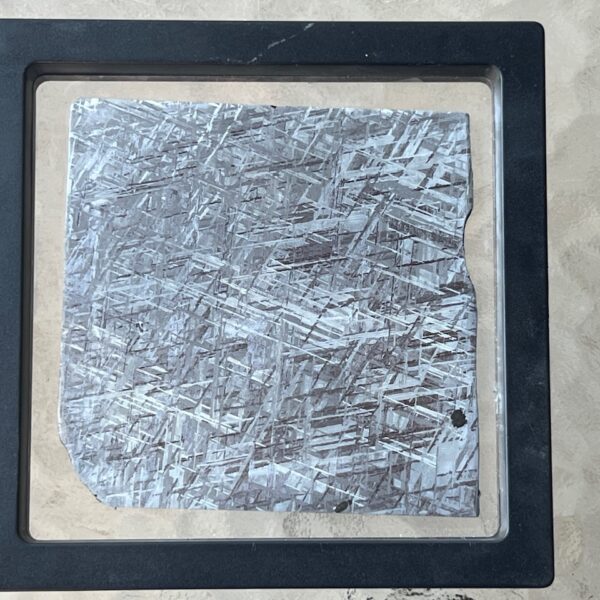
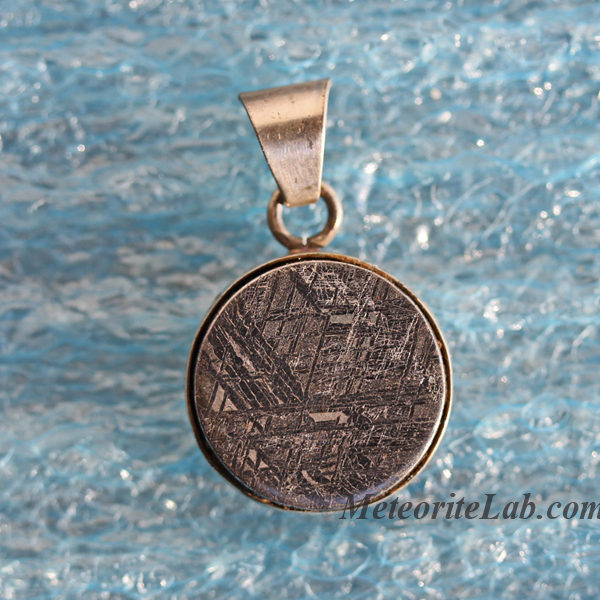
Gibeon meteorite beads: handmade from the iron meteorite found by early explorers in Gibeon, Namibia, Africa. The widmanstattan pattern seen on the surface is unique to this meteorite. The pattern is the crystalline structure of iron formed in a weightless environment over billions of years.
The meteorite iron (93% Fe, 7%Ni) is cut into cubes, shaped into spheres, and polished up to a smooth, mirror-like surface. After that, it is etched with acid that reveals the crystalline structure classified as a fine octahedrite.
Historically, the ancient Egyptians recognized the meteorite metal from the sky as precious. In 1911 several meteorite beads were escavated from a Giza burial site dated at about 3200 BC. These artifacts were crafted by flattened and rolling it into long beads. Also, other meteorite iron impliments were found in tomb of the pharoah Tutankhamun. No way to know if they came from Gibeon but they are known to have a widmanstattan pattern.
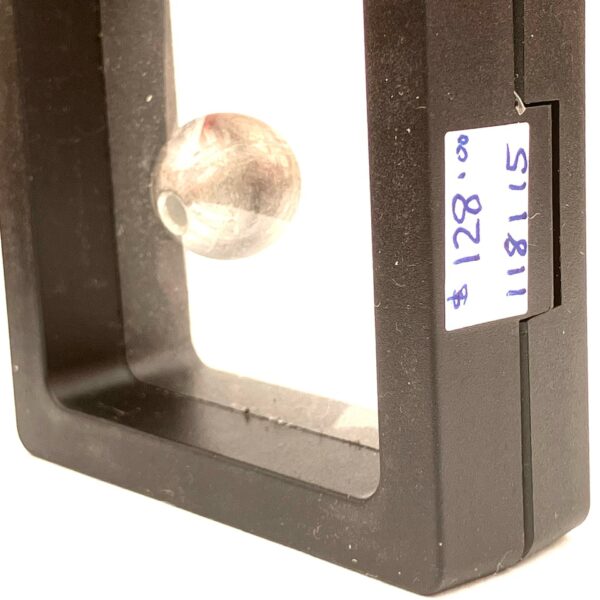
Composed of mostly iron, the beads feel heavy. They stick to a magnet and may rust. Therefore, treat them with care, avoiding chlorine and soaking them in water. If rust appears treat with rust a light oil or rust inhibitor. The bead set comes with a certificate of authenticity and a black membrane 3D frame with pedestal.
$284.00