Canyon Diablo Graphite

CD150

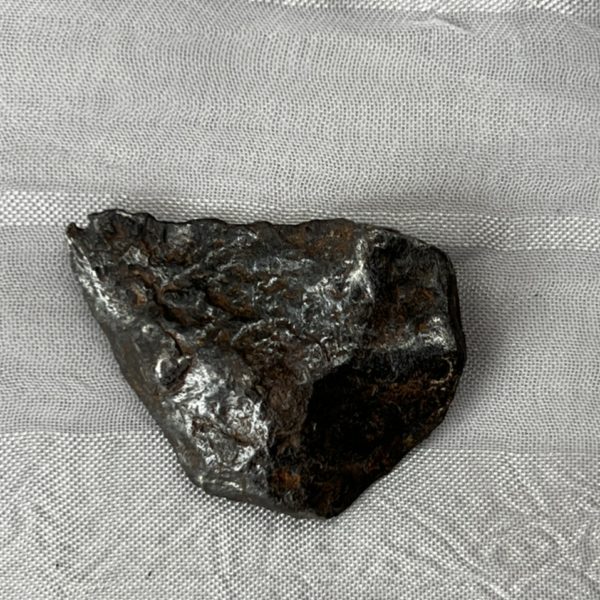
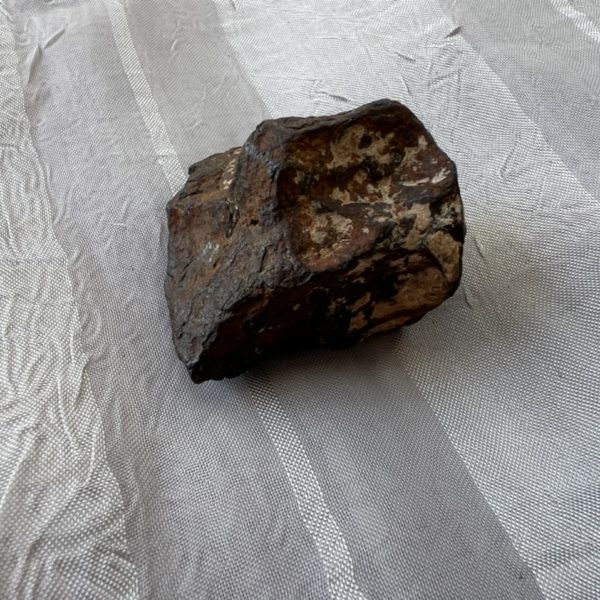
Graphite Nodule

Meteor Crater irons rarely produce these graphite nodules. The graphite inclusions primarily exhibit in the meteoritic iron specimens if they survived the atmospheric entry. Even though graphite is webbed with iron is much softer than the Ni-Fe host therefore melts faster leaving the pockets and bowls Meteor Crater iron meteorites are famous for. The nodules of graphite become separated from the iron on impact. They are always found with bubbly limestone called caliche: imagine the nodules bouncing loose upon the coconino limestone surface as the jagged irons plowed in to the ground.

Significant discoveries in Canyon Diablo graphite is Lonsdaleite, a carbon mineral with crystalization of  “hexagonal diamonds” These differ from geological occuring cubic diamonds. They are proposed to be harder diamonds. They form by meteorite impact and in laboratory simulation of impact. These diamonds may be useful in cutting tools, abrasives and semi-conductors.

60 x 56 x 35 mm

150.6 g complete fragment

$700.00

Categories: ,

Canyon Diablo

Location:
  • USA
    • Arizona
Found: 1891
Group:
  • Iron
Type:
  • Octahedrite, coarse
Class:
  • IA
Total known weight: 30 ton +

Canyon Diablo meteorites come from the most famous impact crater in the world; Meteor Crater, Arizona. These iron meteorites are classified as IA, coarse octahedrite. Many contain inclusions of graphite. When a graphite inclusion pops out of the host meteorite it is called a graphite nodule. Another interesting fact about Canyon Diablo is the occurrence of carbonados or black diamonds formed by impact on earth or in space. These meteorites are typically characterized by classic meteorite features like sharp ridges, holes and bowls.